Cast a long shadow, p.1
Cast a Long Shadow, page 1


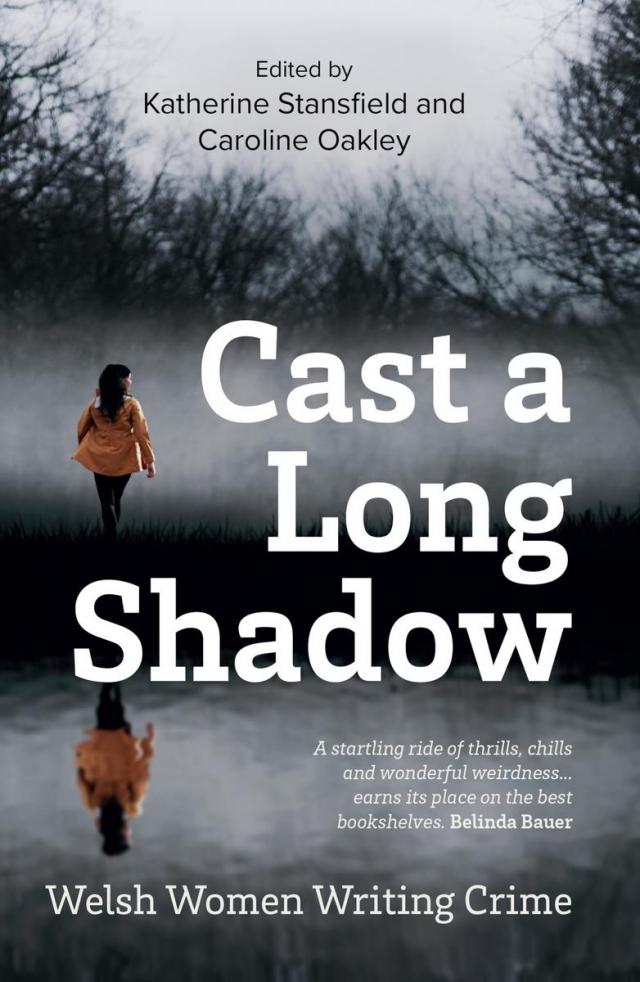
CAST A LONG
SHADOW
Welsh Women Writing Crime
EDITED BY KATHERINE STANSFIELD
AND CAROLINE OAKLEY
HONNO MODERN FICTION
Introduction
At the time of writing this introduction to Cast a Long Shadow, the follow-up to Honno’s 2009 crime short-fiction anthology Written in Blood (edited by Caroline Oakley and Lindsay Ashford), crime fiction is outselling all other fiction genres in the UK. The great variety of the contemporary crime-fiction market goes some way to explain its popularity. Readers enjoy the warmth and humour of ‘cosy’ mysteries atone end of the spectrum, while at the other, psychological thrillers probe the darkest reaches of the human mind. The diversity of fiction between these poles means the genre can meet the tastes of a huge range of readers: historical crime spans the ages; noir stories throw light on political corruption; cold cases are reinvigorated by scientific advances; police procedurals reveal the inner workings of the establishment; spy narratives step into the space left by the Cold War. A fascinating current development is the rise of the genre mash-up, which sees crime fiction motifs blended with fantasy, science fiction, westerns… International crime fiction written in English and crime in translation are more widely available than ever. Far from being a genre that rests on its formulaic antecedents, crime fiction today is diverse and in a continual state of reinvention, reflecting life in all its variety.
Within the covers of contemporary crime fiction can be found the worst of human nature: its depravities and cruelties, its selfishness and disregard for the lives of others. The crimes that animate the plots of crime fiction often arise from unfairness and inequality, or at least individuals’ perceptions of them. But crime fiction is also about the best of ourselves – as characters seek to right wrongs and go that extra mile to find answers, bringing to light the truth. It’s about the murkiness of what is ‘good’ or ‘bad’, too, concerned often with moral greyness that resists easy ideas of right and wrong, innocence and guilt. ‘Justice’ can be a complex and fraught idea to explore, not a neutral outcome. This is especially true for those who lack power in society.
This rich field of contemporary crime writing is one in which women are extremely well-represented – as writers and as readers. But also as victims – a reflection, it must surely be argued, of horrifying levels of real-world male violence against women and girls. For all their trappings of fiction, crime stories often have at their heart a shocking realism, and this is true for this anthology. A number of contributions centre on women and girls as the victims of male violence. Putting together this book in the period in which Sarah Everard was abducted and murdered by a serving police officer in London, resulting in a very public conversation about the safety of women in society, means that the stories women tell of violence, power and justice are more urgent than ever.
Narratives of women as victims do not preclude those that cast women as defenders, seeking justice and to restore order in their world, as they define it. Such characters are plentiful in Cast a Long Shadow, in recognisably realist modes as well as in re-imaginings of myths new and old. Women also feature strongly among the culprits, taking the law into their own hands and not always for the good. A similar plurality can be seen in the nature of crime explored within these covers. Murder plots sit alongside those involving fraud, drug production, theft and issues of consent. And the anthology points forward to transgressive acts that should preoccupy us all, now and in the years to come: crimes against the environment.
Exploring the world of criminality and justice in the short story is a challenge: writers must get to grips with its moral complexity as well as readers’ expectations of narrative form in crime fiction. If the short story is its own distinct form of fiction, the glimpse it offers inherently different from the complex tableau of the novel, then the crime short story must surely be classed as a separate entity within the world of that glimpse. Such stories are an art form all of their own, offering crime fiction in miniature, akin to the ‘Nutshell Studies of Unexplained Deaths’: true-crime scenes rendered in dolls’ houses by Frances Glessnor Lee. Lee created the Nutshell Studies as a way to train homicide detectives in America in the1940s and ’50s. The small-scale horror of toy bedrooms covered in fake blood, dolls drowned in their mini baths, their homes turned over by burglars, is uniquely unsettling. Crime short stories achieve much the same effect as we peer through a window onto a tiny world, and the tales are all the more satisfying for it.
The women writers of Wales have risen to the challenge of this narrative form and the number of submissions for this anthology confirmed the popularity of the genre here, as well as the wealth of talent: crime writing, in all its myriad styles and preoccupations, is a hugely active field in Welsh writing in English. Cast a Long Shadow offers a snapshot of the Welsh women crime writers at work today, with the promise of much more to come.
Contents
Title Page
Introduction
Song Fox Tiffany Murray
Cast a Long Shadow Hazell Ward
Play it for Me Maggie Himsworth
Simon Says Ellen Davies
Hiraeth Katie Munnik
Quirky Robbers Alison Layland
Jack and the Juniper Tree Julie Ann Rees
Street Theatre Sheila Kitrick
Stone Louise Mumford
Galata Caroline Stockford
The Quiet Diana Powell
The Cats of Riyadh Rachel Morris
Pharricidal E. E. Rhodes
Docked Philippa Davies
The Oba’s Head Claire Boot
Strike Weather Louise Walsh
The Pigs in the Middle Kittie Belltree
With Both Eyes Closed Tracey Rhys
Growing Pains Delphine Richards
The Ship Eluned Gramich
Contributors
About the Publisher
Copyright
Song Fox
Tiffany Murray
The knees of her white thermals were black because the sand was black. Arctic wind cut, terns shrieked, and Lilith dug with the small spade. They had been in the cabin spring through summer, and now winter was calling; there was little autumn here.
Lilith knew the waves on this beach could creep up behind you, scoop you up and throw you back at the rocks like laundry, so she faced the sea. She sang with numb lips in that high thin voice he’d so taken to. She sang with a pretty tune but no particular meaning: the song was a list. Ravens on the cliffs bobbed. She heard the vixen and her cubs chirruping from the outcrop above her.
‘Arctic fox. Vulpes lagopus,’ she sang against the wind, ‘Melrakki, little dog on the snow. White, brown,’ she jerked the spade, ‘and blue.’ There were so many words for fox in Icelandic it still excited her. He’d taught her the words, sometimes moving her mouth into the right shape with his fingers.
‘Tófa. Refur. Melrakki. Skolli. Holtaflór. No, Lil, hol-tah-floor,’ he’d said.
Then there was her very own nameless fox. Lilith had spent that first sunny June day following the vixen along the shoreline: she was blue with copper eyes. It was her fox up on the cliffs now, sucking up gull eggs, feeding on carrion, and oblivious to all she’d done. Lilith tore off her gloves; she was burning up.
‘I know,’ she shouted at the wind, ‘a sign of bloody hypothermia!’ She laughed, which she knew, of course, was an added tic of madness. Wind-blown sand stabbed her legs through her thermals; she’d remembered boots, a scarf, a hat, and she’d taken his coat, but she’d forgotten her trousers. It’s the simple things, she thought. She touched the bite mark on her thumb; it had healed well. Black and white eider ducks watched her from the shore and she glanced up at the cabin. She wanted to get in there and pack. This business on the beach was taking too long and as sure as she had been, now she didn’t quite know why she had to do this. Still, Lilith picked up the guitar, a fine 0018 Martin (because he said if it was good enough for early Nanci Griffith then it was good enough for him, and that had made Lilith’s skin itch). She placed the brown guitar in the black hole and sang again, this time a lullaby about going to sleep while the waves wash you clean, and your lover waits on the cliffs until darkness catches him. Lilith stood, wobbly in the growing wind. The raven-boys and her foxes had long gone from the cliffs as she shovelled the last of the sand, and buried the guitar in black. It was done.
Dillon Bar in Reykjavík, that’s where she first saw him play: Timotei hair and beard, and ice-blue eyes. He was such a clichéit hurt. He called himself ‘Thor’, though he confessed to a softer ‘Einar’ after their first night in the van. Lilith knew she was a cliché too when she found herself paying for petrol with her mother’s credit card and sitting at the side of the stage at each of his pub gigs with a cheap can of Heineken and a permanent smile. She took to driving the ring road when the weather wasn’t too bad, while he strummed the 0018 Martin in the back.
‘What’s that?’ she asked at most things, because even the light was strange on this island.
He mumbled, ‘Pink-footed goose, keep your eyes open.’ Other times he said, ‘The aurora borealis, silly,’ and ‘No, they are not spaceships landing, Lil. They’re lit-up greenhouses for tomatoes.’
He said ‘tom-ay-toes’ not ‘tom-ahh-toes’, and Lilith sang a song she’d made up about terns dive-bombing the parked van.
When spring storms came, he drove, and she would curl up in the front seat and pretend she was safe. When she saw the glacier river for the first time she s tood at the shore, dazzled, while he jumped from one block of ice to the next, freezing water running beneath him. A guy yelled from the shoreline that dumb tourists should go home.
‘Where were you born on the island?’ Lilith asked one night in the van and he dodged the question by pulling down her knickers. (It was April but too cold to sleep in a van without thermals and underwear.) As they made their way back to Reykjavík for another small gig in a small bar, and then up, up to the Westfjords and a place he told her was his, she found signs of other women in the van: a silver bangle, a hair clip (though she reasoned that both could easily be his). One morning when he was peeing next to short-legged, long-haired horses, she found a hefty white bra beneath his seat and a screwed-up note written in red lipstick beneath the foldaway mattress. ‘FUCK YOU’, it said. Everyone has a history, Lilith thought.
The cabin was one room with a loft, almost on the black beach, on a peninsula with puffins and not much else. He told her this was the place where he wrote his songs. He worked the pump most mornings, and she couldn’t believe there was electric, not until she followed the pylons with her eye along the deserted gravel track. There was one loo, but Lilith didn’t like to think where that went. The track built into the cliff was two hours to the town in the van.
They took to eating muesli and UHT oat milk at the table by the window, and as Lilith watched the shoreline he told her about the ideas for his songs. She counted fulmar, those pink-footed geese, little black arrows of puffins, and golden plovers (there was a Bird Guide to Iceland on the shelf) and when she first saw the pair of blue foxes play on the beach below, she squealed.
‘That’s the most excited I’ve heard you in weeks,’ he said, and it sounded like a sulk. He poured her a glass of beetroot juice that she left, so he began to give her facts about the foxes.
‘Did you know there’s an Arctic fox jawbone, 3500 years old?’ He chewed hard on the ungiving muesli. ‘Did you know they withstand up to minus 70 without shivering? Did you know those ones are Blue Morphs?’
Lilith put her chin in her hands and wondered why he said, ‘Did you know?’ because of course she didn’t. Iceland was a mystery to her. They had foxes on Grampy’s farm: bright red, sometimes orange or black, and Grampy would shoot some and keep a cub or two for her to release and rear, and for Grampy to shoot again. Even Lilith admitted this was pretty grim.
‘Lil, did you know Arctic foxes are monogamous?’ Beetroot juice stained his teeth and the white blond of his moustache; it dripped onto his beard. She stared out at the grey sea.
‘And did you know the assholes can live to eleven. They stink, too.’
His accent was becoming less Icelandic, more mid-Atlantic. She watched the pair of foxes playing, scavenging on the cold beach; they were long blue-grey cats, tearing at kelp and a goose carcass. She counted the chord changes in his strumming: just three.
‘What songs do you have for me, Lil?’
‘Hmm?’
‘Sing to me, baby.’
She wanted to watch the foxes but he pressed the Martin into her chest and it felt like a weight and she sat back and strummed until a song formed in her, and she didn’t take her eyes away from the kitten-ish foxes as she sang. He recordede very note, every word, on his phone.
‘I’ll be gone maybe a couple of hours.’
She wasn’t worried but felt she should try to worry, so she asked him if she could come after all.
‘You’re too sick, baby.’ He strung his bag across his chest like a schoolgirl with a satchel and although she guessed it must be her fever, it annoyed her more than anything about him now. ‘I can’t miss this gig, baby. You’ll be fine, you have soup, and water, and medication.’
She didn’t like the way he said ‘medication’ like an American advert for a urinary tract infection. She had Paracetamol. She hadn’t shown him the fox bite, she’d wrapped it up and tended to it herself. She’d been bitten before. It was nothing, a few teeth marks on the meat of her thumb, but the fever worried her.
‘Stay,’ she croaked, and he leaned over and kissed her.
‘Ew, you’re sweaty.’ He smiled. ‘See you soon, honey. I’m going to sing your songs.’
He was gone for four days. Lilith’s fever broke on the third.
‘I can’t hear myself think!’ he yelled. The foxes lived in the crawl-space beneath the cabin now, and the cubs rolled and slammed against the floor joists, yip-yapping with summer.
‘I thought you were singing?’
‘Don’t be cute.’
Lilith watched his scowl change to a smile.
‘Come help me, baby, help me with my song,’ he whined. He pressed ‘record’ on his phone.
There were only four cubs in the litter, this was the way it worked up here in the cold. They were as small as kittens, but the stink was enough. Lilith breathed in through her nostrils, the feral tickled her, and she began to sing. She loved the thought that the vixen – her fox – now lived beneath them and breathed in their breath and listened to Lilith’s songs until she howled. The howl was the high-pitched chatter of a monkey in a rainforest, whooping out her territory; then the howl became a cackling witch-laugh, then the chirrup of a coasting songbird. He said the constant noise set his bones on edge.
Lilith found his passport in his computer bag. He was Jonathan Brick, born Rendville, Ohio. He wasn’t Thor, he wasn’t Einar and it wasn’t a surprise. He’d learned the language and the land like he’d learned her songs. After she put the passport neatly back, she walked down to the beach to watch the male fox spend his day catching fulmars. She loved the way the fox gripped the pillowy birds so tight in his jaw, it looked as if he was smiling.
The cubs were bigger now, noisier beneath the cabin, and it was getting colder. Lilith stopped making up songs when she started worrying about the cubs.
‘What will they eat in the winter?’
‘I don’t know, Lil. Will you shut up about the fucking foxes? We’re here to work.’
‘No,’ she said, and a cub yowled so hard it made her laugh.
‘That’s fucking it!’ He slammed his fist on the table and beet juice spilled. He marched up the narrow stairs to the loft and when he came down with a gun, she laughed again and thought, ‘He doesn’t know how to use that.’
She’d forgotten about Rendville, Ohio, but when he shot into the floor of the cabin and the cubs were silent, she knew that everyone must know how to shoot a gun in Rendville, Ohio. She screamed and followed him onto the porch, but he was already chasing the dog-fox up along the cliff’s edge. Lilith jumped to the ground and the base of the cabin. She pushed her head into the small gap the foxes used, the one Jonathan from Ohio had blocked; the one she unblocked every day. There they were, spots of eyes in the darkness, eyes that had to be alive, eyes with the luminous spark still in them.
‘Shh,’ she told them.
Lilith heard more shots from the cliff.
She sprinted, and halfway up the incline it was a shock to see the vixen – her fox, the one who bit her all those months ago – keeping pace with her. Lilith cried out because Jonathan was standing ahead, blocking the path, the gun aimed right at them. As she ran at him Lilith waved her hands, her arms, but still he fired.
‘Help me, Lil.’
It had taken him a full hour to come to. She had crouched at the cliff edge and watched him, the vixen snaking her ankles, chirruping. Lilith was glad the gun was out of his reach. It had fallen down to the beach below whereas he had been caught on a stone outcrop halfway down. She thought his arm was broken, and the bone was certainly sticking out of his leg. There was blood at his head and he wasn’t making much noise, though the puffins and kittiwakes that dive-bombed him were loud. She couldn’t reach him, but the vixen could. The dog-fox was dead beside him, nestled into his side like a sleeping child.
‘Lil.’
It was beginning to snow and she loved the way the black sand turned salt and pepper, and then white.