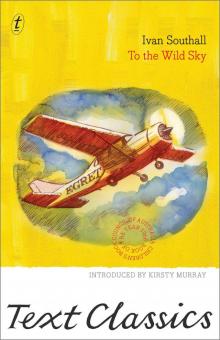
Bread and honey, p.1
Bread and Honey, page 1


IVAN SOUTHALL
BREAD AND HONEY
About Untapped
Most Australian books ever written have fallen out of print and become unavailable for purchase or loan from libraries. This includes important local and national histories, biographies and memoirs, beloved children’s titles, and even winners of glittering literary prizes such as the Miles Franklin Literary Award.
Supported by funding from state and territory libraries, philanthropists and the Australian Research Council, Untapped is identifying Australia’s culturally important lost books, digitising them, and promoting them to new generations of readers. As well as providing access to lost books and a new source of revenue for their writers, the Untapped collaboration is supporting new research into the economic value of authors’ reversion rights and book promotion by libraries, and the relationship between library lending and digital book sales. The results will feed into public policy discussions about how we can better support Australian authors, readers and culture.
See untapped.org.au for more information, including a full list of project partners and rediscovered books.
Readers are reminded that these books are products of their time. Some may contain language or reflect views that might now be found offensive or inappropriate.
CHAPTER ONE
At 7.30, or thereabouts, Michael’s eyes opened and he sat up with a start that left him sick in the stomach. What on earth was he doing in bed when he should have been rushing like mad for the bus stop with schoolbag flying high and cap held hard to his head?
‘Blooming Grandma,’ he wailed. ‘Slept in again!’
He could almost hear that bus roaring away, could almost see himself racing after it, leaping up and down, yelling, ‘Hey, hey!’ The things that happened to Michael Cameron wouldn’t happen to a dog.
Eight miles to the railway station and the train gone, clackety-clacking up to town. Two hours late for school by the time the next bus came around.
‘Not again, Cameron,’ his form master would sigh.
He would lose points for his House because punctuality was compulsory at his school—like winning at games. They were always telling the kids that losing was good for the character, which should have made Michael a saint! But they didn’t give points for coming last and took them away for coming late. Michael’s score was already about minus forty-eight. The kids would glare while he stammered to explain that it was difficult when Dad was away … He was panicking stark naked round the bedroom with his pyjamas thrown off into a heap, bellowing for Grandma. ‘Where’s my shirt? Where’s my suit? Golly, Grandma, we’ve slept in again.’
Then he stopped and looked at himself with surprise and smiled, and scratched himself gleefully, and thumbed his nose at all the kids in class who had called him a crumb when he wasn’t a crumb at all. ‘You shouldn’t be there yourselves,’ he scoffed, ‘you silly lot of clowns. There’s no school today. It’s Anzac Day. You should have stayed at home.’
Suddenly, he didn’t feel sick any more—felt very cheeky indeed—and listened for Grandma with a cocked ear, but she had not made a move. Grandma could turn the world on or off as she chose. When she took out her hearing aid she retreated into a silent place where clocks didn’t strike and people’s mouths were holes that didn’t make sounds. ‘One of the consolations,’ Grandma said, ‘of being old.’ But it drove everyone else mad. Dad would roar at her, ‘Switch it on, Mother. For pity’s sake!’
It was quieter than a Sunday outside, and grey. Fine misty rain was out there, trees were drooping, puddles lay on the straight path to the gate, puddles for splashing in if a fellow weren’t supposed to be half a man—the half that was expected to behave, of course, not the half that could do as it pleased.
Anzac Day.
Not exactly an ordinary holiday without school in Michael’s house. Grandma was up late as a rule the night before making a wreath of chrysanthemums, Grandma with age-freckled hands at the kitchen table weaving stems through leaves and flowers, green for heroes, white for sorrows, red for love. There she would sit for hours, dry-eyed, weaving flowers to place at the foot of the War Memorial in Main Street early during the morning of Anzac Day—after the sound of drums and marching men and medals jangling had died away. That huge crowd of people standing round; Grandma, wreath in hand, waiting her turn; Dad never there. Michael once with a breathless feeling and a big question that he suddenly had to ask. The moment flashed across his mind.
‘Grandma!’
‘Shhhh.’
‘But, Grandma!’
‘Wait until afterwards, dear.’
Her hand had closed over his shoulder giving it a squeeze. He had been smaller then. What was the question that had been so terribly important? How could he forget a question so important that he had wanted to blurt it out and break the silence as wreath after wreath was placed on the ground? Was it last year? Was it the year before? Grandma had taken him to the Anzac parade so many times.
He murmured, a little uncomfortably, as he sometimes did when he embarrassed himself, and sniffed loudly to put it out of his thoughts and rubbed hard at his empty stomach that was flatter than a board and decided that it was not really cold out there this morning.
The grey light had a heavy look about it, as though heavy with interesting smells of earth and sea, as though trees and plants and blades of grass couldn’t bear the weight without bending, a prehistoric light, with cavemen dragging home their girlfriends by the hair of their heads and sabre-toothed tigers licking their chops and kids like Michael not having to wear clothes.
That was a much more comfortable thought, and he recognized it as perhaps a sign of another of those surprising days when sight and hearing and feeling and touch wound up like a very tight spring and everything in the world belonged to him. If he had scrambled into his clothes and headed for the breakfast table or raced for the bus he would have gone rushing on into the day not knowing it was there. But he was naked and beautiful clean air brushed over him—like feathers dipped in dew! Emu feathers? Big and fluffy. All dewy.
He edged to the mirror and expanded his chest until his ribs almost cracked. ‘Not bad,’ he thought, and inspected himself from several interesting angles, flexing his muscles and posing, and saw a stunning-looking fellow on the cover of a health magazine, with the face of Michael Cameron, a chest of about fifty inches and a weeny waist and a purple sash across a mighty shoulder bearing the words Mr Universe. When he looked a bit harder it was only the ordinary Michael in the shadows of the mirror, bones and all.
A shower would be super this morning. Dad wasn’t home to hurry him out of it and Grandma was dead to the world. A fellow could stand there for as long as he liked while water pelted down and steam became a cloud misting on the white mosaic tiles, dripping in dribbles from the wall, billowing out of the open window. Different from other days when he had to stand there just to get clean. He could never fathom that; lying in bed doing nothing all night but having to wash the dirt off in the morning. ‘What dirt, Dad? Here, sniff under me arm. I’m as sweet as a nut.’
He heaved the window up, grating it as far as it would go, and wet air flowed in off the long limp grass. Who wanted showers of soap and steam? Boy, he’d love to run out there and roll in the rain!
Over and over, rolling in the rain …
But he didn’t dare. She’d see, as she had seen before. Mrs Farlow next door would say, as she had said six months ago, ‘Disgusting.’ Then probably she would add, whether it was true or not: ‘and in front of Jillian! He’s without shame.’
Michael wrinkled his nose. What was disgusting about it? The world fairly creaked with bodies, thousands of millions of them, half of them of one kind and half of the other. Everybody knew what everybody else had. It was a mystery the way grown-ups carried on, as if a body was something you were supposed not to have. And who was Jillian anyway? A crummy little kid not twelve years old with nothing better to do with her time than spy.
‘It’s not to happen again, Dr Cameron,’ Mrs Farlow had said. ‘I warn you. It’s not good enough any more. He’s not a baby now. There’s something wrong with that boy.’
Michael had heard through the wall. Golly, it was a row. Dad being awfully matter-of-fact for a while, as if discussing the weather, but Mrs Farlow performing like a prima donna. That was what Dad said to her when he lost his temper. ‘It’s not an opera, Mrs Farlow. You’re not a prima donna, Mrs Farlow. I’ll not have him spoken of in these terms. There’s something wrong with you, Mrs Farlow.’
Good old Dad.
Michael sneered across the garden at a glimpse of the Farlow’s fence, at the one new paling about six months old that Mrs Farlow, her very own self, had slapped into place and hammered home, bending all the nails of course, just to make the men feel bad. Michael had heard Mr Farlow complain, ‘If you’ll give the hammer to me, woman, I’ll do it. You’re making yourself ridiculous.’
Dad hadn’t said anything for a few days; that was Dad’s style. His punishments didn’t take the form of hidings, but hung over the landscape, threatening, like storms not sure when to break. ‘Michael,’ he had grumbled at last. It was always Michael in that particular tone when a lecture was coming. ‘You’re growing up. You’re a big boy.’
Dad had scratched at the top of his head and tugged at his greying hair; that was reckless of him. Dad was getting a bit thin up there. ‘Look here. Surely you realize we don’t wear clothes only to keep w arm. Mrs Farlow’s right, up to a point. No one cared when you were four or five but you’re a big boy now. You know what I’ve told you about life; I’ve not left you ignorant or muddied by the dirt you dig up behind the shelter-sheds at school. You’ve got to start behaving responsibly. Men and women have been wearing clothes for thousands of years because we have learnt that it is best for all of us; nothing to do with what’s right or wrong. These nudists—I can’t work them out; it’s not like that for most of us. Perhaps girls can get excited and not show it, but that’s not the way it is for boys. When we clothe ourselves modestly we start creating. Would you rather live in a house like this or under a slab of rock? You touch a switch and cook your dinner. Turn a tap and shower in hot water. Twist a knob and a picture of the world is in your living-room. Open a book and a miracle of imagination is yours for the reading. Drop a sapphire on a plastic disk and listen to the most wonderful sounds any creature has heard. The rain falls and you don’t get wet. You’re safe. In my opinion, boy, men and women have done this for themselves because some enterprising fellow with more than one thought on his mind had the sense to hang a strip of bark across his middle—not because he was cold. You remember that, Michael, or I’ll string you up by the toes.’
So when it got down to brass tacks, Dad was the same as the rest of them. Laying down the law; hammering the point. He was on their side and didn’t understand. A fellow didn’t want to run around naked all the time showing off what he had. The thought was never even there until they started screaming about it and making an issue of it. Didn’t they know it was like an itch or a kick at a football? Just happened once in a while, sometimes when you felt like it, other times by surprise. Dad took things too far; talk of sapphires and cooking the dinner had as much to do with rolling in the grass as the price of fish. And grown-ups weren’t too bad at stripping off either; maybe they reckoned it was different when the temperature was ninety in the shade and a hundred thousand baked side by side in the sun on the sand. Different for them.
All those horrible-looking bodies; all lumps and bumps and blotches and hairy legs lined up in rows, only the young ones looking nice. Mrs Farlow in a swim-suit was the last straw— ‘Enough to put you off food for the rest of your days—’ Dad’s very own words.
All the art galleries, filled with paintings and statues on view all the time. People could stand and stare for as long as they pleased. They took you with the school and made you stare. But if Michael Cameron rolled on his own front lawn he was committing a crime. Whose fault was it if crummy Jillian Farlow had her nose pressed to the crack in the fence? His or hers? She’d get her nose stuck there one of these days and they’d have to prise her out with a crowbar.
He murmured again, uncomfortably, and was cross with himself for allowing his thoughts to go in the direction that made him miserable. There was a nice warm, happy feeling down deep and he wanted it to bubble up and take charge, but all sorts of things kept getting in the way, and when half of him wanted to head for the bathroom the other half stayed exactly where it was, stretching in that cool current of light and air, daring the world to look in on him, daring Grandma to walk in and say, ‘Godfathers, boy. Cover yourself in front of the window. That’s rude.’ But Grandma didn’t come and no one walked by. Maybe Grandma wouldn’t have cared anyway. She was funny. Terribly old-fashioned, yet she’d barge in on him in the bathroom as if he weren’t there.
It was very quiet outside, deathly quiet except for the dripping of the rain. Trees and grass and greeny-greyness and somewhere, over the edge of the cliff, the sea lying like lead, solid and silent. The temptation was awful. He’d love to slide over the window-sill and run all the way to the sea and swim for miles, out past the sand bars, out into the channel where the big ships steamed, the cargo ships, the liners, the grey ships with guns.
Once upon a time, Dad said, ten million men marched to war to have their heads blown off. Once a year on Anzac Day, Dad said, everybody thought about it, perhaps for an hour, at least for a minute, and shops and offices and factories didn’t open and schools stayed shut and almost everyone slept in. Dad, when he was home, slept in too. But Dad hadn’t come home during the night; the inside of the house had that dead feeling. When Dad was there it felt alive. And Michael’s brothers weren’t there either, though he didn’t care much about them. He thought of Richard the physicist working with his rockets hundreds of miles away, and of Gregory the metallurgist working with his bauxite even farther away. Other kids had boys for brothers; Michael’s brothers were men. Terribly condescending, patting him on the head, slinging him a dollar to spend, but never rolling up their sleeves for a bit of fun. They never wrote while they were away, and, like Dad, would have slept in on Anzac Day if they had been at home.
Dad wouldn’t go to the march with Grandma even though he had medals from the war in a drawer of his desk.
‘All that’s over, Mother,’ Michael had heard him say. ‘I don’t want to remember that I bombed Dresden. If you had been there you wouldn’t want to remember either.’
‘You’re wrong, you’re wrong,’ Grandma had cried. ‘We don’t go to the march to celebrate deeds. We go to mourn them. Haven’t you any respect for the dead? For your own dead? For your own family?’
‘Yes,’ Dad had said, ‘too much respect to wear it on my sleeve in public.’
‘If that’s the way you feel you should resign from your job. Taking money from the Government, if that’s the way you feel, is a sin. How can you possibly believe in your job? You’re dishonest. You’re immoral. You’re a fraud.’
It was hard trying to understand what was what when Dad and Grandma got together. They loved each other an awful lot but couldn’t agree on anything. All the time arguing or observing a cool silence or speaking to each other round corners: ‘Michael, tell your father …’ ‘Michael, tell your grandmother …’ There was nothing about being stupid that kids could show them. Yet Grandma was a very dignified old lady of eighty-three, and Dad was a scientist whose opinions were so important that the Prime Minister called him on the telephone.
‘We’re not fighting, Michael,’ Grandma would say. ‘Don’t get the wrong idea. It’s really only a game.’
Suddenly, the cold quarry tiles of the veranda were slapping under his feet and he was leaping in the air and rolling in the grass.
Rolling over and over in the rain, driving out all the thoughts and unhappy feelings he didn’t want, then lying still, as still as a frog wrapped in grass, listening, smiling, heart thudding like the Salvation Army Band marching down Main Street on Anzac Day, out in front of all the men who fought in the wars; thud, thud, thudding on the drums. Even shivering deliciously with nerves because it was not like being down on Deakin Beach after dark. There was a danger here that was hardly ever there; Grandma’s window not fifteen feet away, the Farlow’s fence not twenty feet away, the street not sixty feet away. Anyone could walk by; anyone could see. It was like hanging by the finger-tips over a hundred foot drop.
But there were no footsteps, no voices, no sounds of people. Grandma didn’t beat on her window-pane, Jillian didn’t snigger from beyond the fence. He sank into the grass, down and down, and rain pattered on his back, and his nerve-ends stood up to meet it, to coax it into trickles, to wriggle it into pools. He had to clench his teeth from the agony and the joy.
He rolled again, over and over, and rocked from side to side and allowed the world to rain gently on the front of him. He stuck out his tongue to lap it up. He wriggled and sank down.
‘The earth is a practical place, Michael,’ Dad had been saying from way back. ‘Head out of the clouds, son. Face facts.’ Other kids had believed in Santa Claus; other kids had put their baby teeth in tumblers of water and fairies had passed by with wands and changed them into shining silver coins. ‘Don’t put your faith, my boy, in silly imaginations. There are no fairies, no ghosts, no magicians, no angels with harps. There are no mysteries in heaven or earth that can’t be expressed mathematically as formulae or dismissed as poisonous nonsense. You accept the world for what it is. The rock that hangs on the cliff is hard; you can analyse it, you can break it down into invisible particles; but when that rock falls and hits you on the head it kills you dead. That’s life, my boy. That’s nature. Blood and claw. Your Grandma tells you it’s God who’s good and man who’s bad. If God is good He’s got a lot to answer for!’