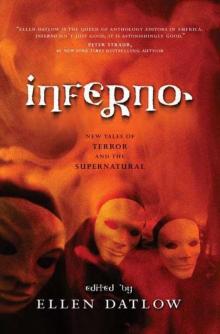
Edited by, p.23
Edited By, page 23


“I don’t know what they want,” Eric said. “The zombies.”
“Nobody ever really knows what they want,” Charley said. “Why should that change after you die?”
“Good point,” Eric said.
“You shouldn’t let Batu mess you around so much,” Charley said. “I shouldn’t be saying all this, I know. Batu and I are friends. But we could be friends too, you and me. You’re sweet. It’s okay that you don’t talk much, although this is okay too, us talking. Why don’t you come for a drive with me?” If there had been dogs inside her car, or the ghosts of dogs, then Eric would have heard them howling. Eric heard them howling. The dogs were telling him to get lost. They were telling him to fuck off. Charley belonged to them. She was their murderer.
“I can’t,” Eric said, longing for Charley to ask again. “Not right now.”
“Well, that’s okay. I’ll stop by later,” Charley said. She smiled at him and for a moment he was standing in that city where no one ever figured out how to put out that fire, and all the dead dogs howled again, and scratched at the smeary windows. “For a Mountain Dew. So you can think about it for a while.”
She reached out and took Eric’s hand in her hand. “Your hands are cold,” she said. Her hands were hot. “You should go back inside.”
Rengi begenmiyorum.
I don’t like the color.
It was already 4 a.m. and there still wasn’t any sign of Charley when Batu came out of the back room. He was rubbing his eyes. The black pajamas were gone. Now Batu was wearing pajama bottoms with foxes running across a field towards a tree with a circle of foxes sitting on their haunches around it. The outstretched tails of the running foxes were fat as zeppelins, with commas of flame hovering over them. Each little flame had a Hindenburg inside it, with a second littler flame above it, and so on. Some fires you just can’t put out.
The pajama top was a color that Eric could not name. Dreary, creeping shapes lay upon it. Eric had read Lovecraft. He felt queasy when he looked at the pajama top.
“I just had the best dream,” Batu said.
“You’ve been asleep for almost six hours,” Eric said. When Charley came, he would go with her. He would stay with Batu. Batu needed him. He would go with Charley. He would go and come back. He wouldn’t ever come back. He would send Batu postcards with bears on them. “So what was all that about? With the zombies.”
“I don’t know what you’re talking about,” Batu said. He took an apple from the fruit display and polished it on his non-Euclidean pajama top. The apple took on a horrid, whispery sheen. “Has Charley come by?”
“Yeah,” Eric said. He and Charley would go to Las Vegas. They would buy Batu gold lamé pajamas. “I think you’re right. I think she’s about to leave town.”
“Well, she can’t!” Batu said. “That’s not the plan. Here, I tell you what we’ll do. You go outside and wait for her. Make sure she doesn’t get away.”
“She’s not wanted by the police, Batu,” Eric said. “She doesn’t belong to us. She can leave town if she wants to.”
“And you’re okay with that?” Batu said. He yawned ferociously, and yawned again, and stretched, so that the pajama top heaved up in an eldritch manner. Eric closed his eyes.
“Not really,” Eric said. He had already picked out a toothbrush, some toothpaste, and some novelty teeth, left over from Halloween, which he could give to Charley, maybe. “Are you okay? Are you going to fall asleep again? Can I ask you some questions?”
“What kind of questions?” Batu said, lowering his eyelids in a way that seemed both sleepy and cunning.
“Questions about our mission,” Eric said. “About the All-Night and what we’re doing here next to the Ausible Chasm. I need to understand what just happened with the zombies and the pajamas, and whether or not what happened is part of the plan, and whether or not the plan belongs to us, or whether the plan was planned by someone else, and we’re just somebody else’s big experiment in retail. Are we brand-new, or are we just the same old thing?”
“This isn’t a good time for questions,” Batu said. “In all the time that we’ve worked here, have I lied to you? Have I led you astray?”
“Well,” Eric said. “That’s what I need to know.”
“Perhaps I haven’t told you everything,” Batu said. “But that’s part of the plan. When I said that we were going to make everything new again, that we were going to reinvent retail, I was telling the truth. The plan is still the plan, and you are still part of that plan, and so is Charley.”
“What about the pajamas?” Eric said. “What about the Canadians and the maple syrup and the people who come in to buy Mountain Dew?”
“You need to know this?” Batu said.
“Yes,” Eric said. “Absolutely.”
“Okay, then. My pajamas are experimental CIA pajamas,” Batu said. “Like batteries. You’ve been charging them for me when you sleep. That’s all I can say right now. Forget about the Canadians. These pajamas the zombies just gave me—do you have any idea what this means?”
Eric shook his head no.
Batu said, “Never mind. Do you know what we need now?”
“What do we need?” Eric said.
“We need you to go outside and wait for Charley,” Batu said. “We don’t have time for this. It’s getting early. Charley gets off work any time now.”
“Explain all of that again,” Eric said. “What you just said. Explain the plan to me one more time.”
“Look,” Batu said. “Listen. Everybody is alive at first, right?”
“Right,” Eric said.
“And everybody dies,” Batu said. “Right?”
“Right,” Eric said. A car drove by, but it still wasn’t Charley.
“So everybody starts here,” Batu said. “Not here, in the All-Night, but somewhere here, where we are. Where we live now. Where we live is here. The world. Right?”
“Right,” Eric said. “Okay.”
“And where we go is there,” Batu said, flicking a finger towards the road. “Out there, down into the Ausible Chasm. Everybody goes there. And here we are, here, the All-Night, which is on the way to there.”
“Right,” Eric said.
“So it’s like the Canadians,” Batu said. “People are going someplace, and if they need something, they can stop here, to get it. But we need to know what they need. This is a whole new unexplored demographic. So they stuck the All-Night right here, lit it up like a Christmas tree, and waited to see who stopped in and what they bought. I shouldn’t be telling you this. This is all need-to-know information only.”
“You mean the All-Night or the CIA or whoever needs us to figure out how to sell things to zombies,” Eric said.
“Forget about the CIA,” Batu said. “Now will you go outside?”
“But is it our plan? Or are we just following someone else’s plan?”
“Why does that matter to you?” Batu said. He put his hands on his head and tugged at his hair until it stood straight up, but Eric refused to be intimidated.
“I thought we were on a mission,” Eric said, “to help mankind. Womankind too. Like the Starship Enterprise. But how are we helping anybody? What’s new-style retail about this?”
“Eric,” Batu said. “Did you see those pajamas? Look. On second thought, forget about the pajamas. You never saw them. Like I said, this is bigger than the All-Night. There are bigger fish that are fishing, if you know what I mean.”
“No,” Eric said. “I don’t.”
“Excellent,” Batu said. His experimental CIA pajama top writhed and boiled. “Your job is to be helpful and polite. Be patient. Be careful. Wait for the zombies to make the next move. I’ll send off some faxes. Meanwhile, we still need Charley. Charley is a natural-born saleswoman. She’s been selling death for years. And she’s got a real gift for languages—she’ll be speaking zombie in no time. Think what kind of work she could do here! Go outside. When she drives by, you flag her down. Talk to her. Explain why she needs to come live here. But whatever you do, don’t get in the car with her. That car is full of ghosts. The wrong kind of ghosts. The kind who are never going to understand the least little thing about meaningful transactions.”
“I know,” Eric said. “I could smell them.”
“So are we clear on all this?” Batu said. “Or maybe you think I’m still lying to you?”
“I don’t think you’d lie to me, exactly,” Eric said. He put on his jacket.
“You better put on a hat too,” Batu said. “It’s cold out there. You know you’re like a son to me, which is why I tell you to put on your hat. And if I lied to you, it would be for your own good, because I love you like a son. One day, Eric, all of this will be yours. Just trust me and do what I tell you. Trust the plan.”
Eric said nothing. Batu patted him on the shoulder, pulled an All-Night shirt over his pajama top, and grabbed a banana and a Snapple. He settled in behind the counter. His hair was still standing straight up, but at four a.m., who was going to complain? Not Eric, not the zombies. Eric put on his hat, gave a little wave to Batu, which was either, Glad we cleared all that up at last, or else, So long!, he wasn’t sure which, and walked out of the All-Night. This is the last time, he thought, I will ever walk through this door. He didn’t know how he felt about that.
Eric stood outside in the parking lot for a long time. Out in the bushes, on the other side of the road, he could hear the zombies hunting for the things that were valuable to other zombies.
Some woman, a real person, but not Charley, drove into the parking lot. She went inside, and Eric thought he knew what Batu would say to her when she went to the counter. Batu would explain when she tried to make her purchase that he didn’t want money. That wasn’t what retail was really about. What Batu would want to know was what this woman really wanted. It was that simple, that complicated. Batu might try to recruit this woman, if she didn’t seem litigious, and maybe that was a good thing. Maybe the All-Night really did need women.
Eric walked backwards, away and then even farther away from the All-Night. The farther he got, the more beautiful he saw it all was—it was all lit up like the moon. Was this what the zombies saw? What Charley saw, when she drove by? He couldn’t imagine how anyone could leave it behind and never come back.
Maybe Batu had a pair of pajamas in his collection with All-Night Convenience Stores and light spilling out; the Ausible Chasm; a road with zombies, and Charleys in Chevys, a different dog hanging out of every passenger window, driving down that road. Down on one leg of those pajamas, down the road a long ways, there would be bears dressed up in ice; Canadians; CIA operatives and tabloid reporters and All-Night executives. Las Vegas showgirls. G-men and bee men in trench coats. His mother’s car, always getting farther and farther away. He wondered if zombies wore zombie pajamas, or if they’d just invented them for Batu. He tried to picture Charley wearing silk pajamas and a flannel bathrobe, but she didn’t look comfortable in them. She still looked miserable and angry and hopeless, much older than Eric had ever realized.
He jumped up and down in the parking lot, trying to keep warm. The woman, when she came out of the store, gave him a funny look. He couldn’t see Batu behind the counter. Maybe he’d fallen asleep again, or maybe he was sending off more faxes. But Eric didn’t go back inside the store. He was afraid of Batu’s pajamas.
He was afraid of Batu.
He stayed outside, waiting for Charley.
But a few hours later, when Charley drove by—he was standing on the curb, keeping an eye out for her, she wasn’t going to just slip away, he was determined to see her, not to miss her, to make sure that she saw him, to make her take him with her, wherever she was going—there was a Labrador in the passenger seat. The backseat of her car was full of dogs, real dogs and ghost dogs, and all of the dogs poking their doggy noses out of the windows at him. There wouldn’t have been room for him, even if he’d been able to make her stop. But he ran out in the road anyway, like a damn dog, chasing after her car for as long as he could.
The Hortlak
The Dark: New Ghost Stories is an all original ghost story anthology published in 2003. It won the International Horror Guild Award. Kelly Link’s “The Hortlak” is about zombies and dogs and it was nominated for the World Fantasy Award, as was the entire anthology.
In the Month of Athyr
by Elizabeth Hand
(From OMNI Best SF Two, 1992)
In the month of Athyr Leucis fell asleep.
—C.P. Cavafy, “In the Month of Athyr”
The argala came to live with them on the last day of Mestris, when Paul was fifteen. High summer, it would have been by the old Solar calendar; but in the HORUS station it was dusk, as it always was. The older boys were poring over an illustrated manual of sexual positions by the sputtering light of a lumière filched from Father Dorothy’s cache behind the galley refrigerator. Since Paul was the youngest he had been appointed to act as guard. He crouched beside the refrigerator, shivering in his pajamas, and cursed under his breath. He had always been the youngest, always would be the youngest. There had been no children born on the station since Father Dorothy arrived to be the new tutor. In a few months, Father Dorothy had converted Teichman Station’s few remaining women to the Mysteries of Lysis. Father Dorothy was a galli, a eunuch who had made the ultimate sacrifice to the Great Mother during one of the high holy days Below. The Mysteries of Lysis was a relatively new cult. Its adherents believed that only by reversing traditional gender roles could the sexes make peace after their long centuries of open hostility. These reversals were enacted literally, often to the consternation of non-believing children and parents.
On the stations, it was easier for such unusual sects and controversial ideas to gain a toehold. The current ruling Ascendancy embraced a cult of rather recent vintage, a form of religious fundamentalism that was a cunning synthesis of the more extreme elements of several popular and ancient faiths. For instance, the Ascendants encouraged female infanticide among certain populations, including the easily monitored network of facilities that comprised the Human Orbital Research Units in Space, or HORUS. Because of recent advances in bioengineering, the Ascendants believed that women, long known to be psychologically mutable and physically unstable, might also soon be unnecessary. Thus were the heavily reviled feminist visionaries of earlier centuries unhappily vindicated. Thus the absence of girl children on Teichman, as well as the rift between the few remaining women and their husbands.
To the five young boys who were his students, Father Dorothy’s devotion to the Mysteries was inspiring in its intensity. Their parents were also affected; Father Dorothy believed in encouraging discussions of certain controversial gender policies. Since his arrival, relations between men and women had grown even more strained. Paul’s mother was now a man, and his father had taken to spending most of his days in the station’s neural sauna, letting its wash of endorphins slowly erode his once-fine intellect to a soft soppy blur. The argala was to change all that.
“Pathori,” hissed Claude Illo, tossing an empty salt-pod at Paul’s head. “Pathori, come here!”
Paul rubbed his nose and squinted. A few feet away Claude and the others, the twins Reuben and Romulus and the beautiful Ira Claire, crouched over the box of exotic poses.
“Pathori, come here!”
Claude’s voice cracked. Ira giggled; a moment later Paul winced as he heard Claude smack him.
“I mean it,” Claude warned. Paul sighed, flicked the salt-pod in Ira’s direction and scuttled after it.
“Look at this,” Claude whispered. He grabbed Paul by the neck and forced his head down until his nose was a scant inch away from the hologravures. The top image was of a woman, strictly forbidden. She was naked, which made it doubly forbidden; and with a man, and smiling. It was that smile that made the picture particularly damning; according to Father Dorothy, a woman in such a posture would never enjoy being there. The woman in the gravure turned her face, tossing back hair that was long and impossibly blonde. For an instant Paul glimpsed the man sitting next to her. He was smiling too, but wearing the crimson leathers of an Ascendant Aviator. Like the woman, he had the ruddy cheeks and even teeth Paul associated with antique photographs or tapes. The figures began to move suggestively. Paul’s head really should explode, now, just like Father Dorothy had warned. He started to look away, embarrassed and aroused, when behind him Claude swore—
“—move, damn it, it’s Dorothy!—”
But it was too late.
“Boys…”
Father Dorothy’s voice rang out, a hoarse tenor. Paul looked up and saw him, clad as always in salt-and-pepper tweeds, his long grey hair pulled back through a copper loop. “It’s late, you shouldn’t be here.”
They were safe: their tutor was distracted. Paul looked beyond him, past the long sweep of the galley’s gleaming equipment to where a tall figure stood in the shadows. Claude swept the box of hologravures beneath a stove and stood, kicking Paul and Ira and gesturing for the twins to follow him.
“Sorry, Father,” he grunted, gazing at his feet. Beside him Paul tried not to stare at whoever it was that stood at the end of the narrow corridor.
“Go along, then,” said Father Dorothy, waving his hands in the direction of the boys’ dormitory. As they hurried past him, Paul could smell the sandalwood soap Father Dorothy had specially imported from his home Below, the only luxury he allowed himself. And Paul smelled something else, something strange. The scent made him stop. He looked over his shoulder and saw the figure still standing at the end of the galley, as though afraid to enter while the boys were there. Now that they seemed to be gone the figure began to walk towards Father Dorothy, picking its feet up with exaggerated delicacy. Paul stared, entranced.
“Move it, Pathori,” Claude called to him; but Paul shook his head and stayed where he was. Father Dorothy had his back to them. One hand was outstretched to the figure. Despite its size—it was taller than Paul, taller than Father Dorothy—there was something fragile and childlike about it. Thin and slightly stooped, with wispy yellow hair like feathers falling onto curved thin shoulders, frail arms crossed across its chest and legs that were so long and frail that he could see why it walked in that awkward tippy-toe manner: if it fell its legs would snap like chopsticks. It smelled like nothing else on Teichman Station, sweet and powdery and warm. Once, Paul thought, his mother had smelled like that, before she went to stay in the women’s quarters. But this thing looked nothing like his mother. As he stared, it slowly lifted its face, until he could see its enormous eyes fixed on him: caramel-colored eyes threaded with gold and black, staring at him with a gaze that was utterly adoring and absolutely witless.
“Nobody ever really knows what they want,” Charley said. “Why should that change after you die?”
“Good point,” Eric said.
“You shouldn’t let Batu mess you around so much,” Charley said. “I shouldn’t be saying all this, I know. Batu and I are friends. But we could be friends too, you and me. You’re sweet. It’s okay that you don’t talk much, although this is okay too, us talking. Why don’t you come for a drive with me?” If there had been dogs inside her car, or the ghosts of dogs, then Eric would have heard them howling. Eric heard them howling. The dogs were telling him to get lost. They were telling him to fuck off. Charley belonged to them. She was their murderer.
“I can’t,” Eric said, longing for Charley to ask again. “Not right now.”
“Well, that’s okay. I’ll stop by later,” Charley said. She smiled at him and for a moment he was standing in that city where no one ever figured out how to put out that fire, and all the dead dogs howled again, and scratched at the smeary windows. “For a Mountain Dew. So you can think about it for a while.”
She reached out and took Eric’s hand in her hand. “Your hands are cold,” she said. Her hands were hot. “You should go back inside.”
Rengi begenmiyorum.
I don’t like the color.
It was already 4 a.m. and there still wasn’t any sign of Charley when Batu came out of the back room. He was rubbing his eyes. The black pajamas were gone. Now Batu was wearing pajama bottoms with foxes running across a field towards a tree with a circle of foxes sitting on their haunches around it. The outstretched tails of the running foxes were fat as zeppelins, with commas of flame hovering over them. Each little flame had a Hindenburg inside it, with a second littler flame above it, and so on. Some fires you just can’t put out.
The pajama top was a color that Eric could not name. Dreary, creeping shapes lay upon it. Eric had read Lovecraft. He felt queasy when he looked at the pajama top.
“I just had the best dream,” Batu said.
“You’ve been asleep for almost six hours,” Eric said. When Charley came, he would go with her. He would stay with Batu. Batu needed him. He would go with Charley. He would go and come back. He wouldn’t ever come back. He would send Batu postcards with bears on them. “So what was all that about? With the zombies.”
“I don’t know what you’re talking about,” Batu said. He took an apple from the fruit display and polished it on his non-Euclidean pajama top. The apple took on a horrid, whispery sheen. “Has Charley come by?”
“Yeah,” Eric said. He and Charley would go to Las Vegas. They would buy Batu gold lamé pajamas. “I think you’re right. I think she’s about to leave town.”
“Well, she can’t!” Batu said. “That’s not the plan. Here, I tell you what we’ll do. You go outside and wait for her. Make sure she doesn’t get away.”
“She’s not wanted by the police, Batu,” Eric said. “She doesn’t belong to us. She can leave town if she wants to.”
“And you’re okay with that?” Batu said. He yawned ferociously, and yawned again, and stretched, so that the pajama top heaved up in an eldritch manner. Eric closed his eyes.
“Not really,” Eric said. He had already picked out a toothbrush, some toothpaste, and some novelty teeth, left over from Halloween, which he could give to Charley, maybe. “Are you okay? Are you going to fall asleep again? Can I ask you some questions?”
“What kind of questions?” Batu said, lowering his eyelids in a way that seemed both sleepy and cunning.
“Questions about our mission,” Eric said. “About the All-Night and what we’re doing here next to the Ausible Chasm. I need to understand what just happened with the zombies and the pajamas, and whether or not what happened is part of the plan, and whether or not the plan belongs to us, or whether the plan was planned by someone else, and we’re just somebody else’s big experiment in retail. Are we brand-new, or are we just the same old thing?”
“This isn’t a good time for questions,” Batu said. “In all the time that we’ve worked here, have I lied to you? Have I led you astray?”
“Well,” Eric said. “That’s what I need to know.”
“Perhaps I haven’t told you everything,” Batu said. “But that’s part of the plan. When I said that we were going to make everything new again, that we were going to reinvent retail, I was telling the truth. The plan is still the plan, and you are still part of that plan, and so is Charley.”
“What about the pajamas?” Eric said. “What about the Canadians and the maple syrup and the people who come in to buy Mountain Dew?”
“You need to know this?” Batu said.
“Yes,” Eric said. “Absolutely.”
“Okay, then. My pajamas are experimental CIA pajamas,” Batu said. “Like batteries. You’ve been charging them for me when you sleep. That’s all I can say right now. Forget about the Canadians. These pajamas the zombies just gave me—do you have any idea what this means?”
Eric shook his head no.
Batu said, “Never mind. Do you know what we need now?”
“What do we need?” Eric said.
“We need you to go outside and wait for Charley,” Batu said. “We don’t have time for this. It’s getting early. Charley gets off work any time now.”
“Explain all of that again,” Eric said. “What you just said. Explain the plan to me one more time.”
“Look,” Batu said. “Listen. Everybody is alive at first, right?”
“Right,” Eric said.
“And everybody dies,” Batu said. “Right?”
“Right,” Eric said. A car drove by, but it still wasn’t Charley.
“So everybody starts here,” Batu said. “Not here, in the All-Night, but somewhere here, where we are. Where we live now. Where we live is here. The world. Right?”
“Right,” Eric said. “Okay.”
“And where we go is there,” Batu said, flicking a finger towards the road. “Out there, down into the Ausible Chasm. Everybody goes there. And here we are, here, the All-Night, which is on the way to there.”
“Right,” Eric said.
“So it’s like the Canadians,” Batu said. “People are going someplace, and if they need something, they can stop here, to get it. But we need to know what they need. This is a whole new unexplored demographic. So they stuck the All-Night right here, lit it up like a Christmas tree, and waited to see who stopped in and what they bought. I shouldn’t be telling you this. This is all need-to-know information only.”
“You mean the All-Night or the CIA or whoever needs us to figure out how to sell things to zombies,” Eric said.
“Forget about the CIA,” Batu said. “Now will you go outside?”
“But is it our plan? Or are we just following someone else’s plan?”
“Why does that matter to you?” Batu said. He put his hands on his head and tugged at his hair until it stood straight up, but Eric refused to be intimidated.
“I thought we were on a mission,” Eric said, “to help mankind. Womankind too. Like the Starship Enterprise. But how are we helping anybody? What’s new-style retail about this?”
“Eric,” Batu said. “Did you see those pajamas? Look. On second thought, forget about the pajamas. You never saw them. Like I said, this is bigger than the All-Night. There are bigger fish that are fishing, if you know what I mean.”
“No,” Eric said. “I don’t.”
“Excellent,” Batu said. His experimental CIA pajama top writhed and boiled. “Your job is to be helpful and polite. Be patient. Be careful. Wait for the zombies to make the next move. I’ll send off some faxes. Meanwhile, we still need Charley. Charley is a natural-born saleswoman. She’s been selling death for years. And she’s got a real gift for languages—she’ll be speaking zombie in no time. Think what kind of work she could do here! Go outside. When she drives by, you flag her down. Talk to her. Explain why she needs to come live here. But whatever you do, don’t get in the car with her. That car is full of ghosts. The wrong kind of ghosts. The kind who are never going to understand the least little thing about meaningful transactions.”
“I know,” Eric said. “I could smell them.”
“So are we clear on all this?” Batu said. “Or maybe you think I’m still lying to you?”
“I don’t think you’d lie to me, exactly,” Eric said. He put on his jacket.
“You better put on a hat too,” Batu said. “It’s cold out there. You know you’re like a son to me, which is why I tell you to put on your hat. And if I lied to you, it would be for your own good, because I love you like a son. One day, Eric, all of this will be yours. Just trust me and do what I tell you. Trust the plan.”
Eric said nothing. Batu patted him on the shoulder, pulled an All-Night shirt over his pajama top, and grabbed a banana and a Snapple. He settled in behind the counter. His hair was still standing straight up, but at four a.m., who was going to complain? Not Eric, not the zombies. Eric put on his hat, gave a little wave to Batu, which was either, Glad we cleared all that up at last, or else, So long!, he wasn’t sure which, and walked out of the All-Night. This is the last time, he thought, I will ever walk through this door. He didn’t know how he felt about that.
Eric stood outside in the parking lot for a long time. Out in the bushes, on the other side of the road, he could hear the zombies hunting for the things that were valuable to other zombies.
Some woman, a real person, but not Charley, drove into the parking lot. She went inside, and Eric thought he knew what Batu would say to her when she went to the counter. Batu would explain when she tried to make her purchase that he didn’t want money. That wasn’t what retail was really about. What Batu would want to know was what this woman really wanted. It was that simple, that complicated. Batu might try to recruit this woman, if she didn’t seem litigious, and maybe that was a good thing. Maybe the All-Night really did need women.
Eric walked backwards, away and then even farther away from the All-Night. The farther he got, the more beautiful he saw it all was—it was all lit up like the moon. Was this what the zombies saw? What Charley saw, when she drove by? He couldn’t imagine how anyone could leave it behind and never come back.
Maybe Batu had a pair of pajamas in his collection with All-Night Convenience Stores and light spilling out; the Ausible Chasm; a road with zombies, and Charleys in Chevys, a different dog hanging out of every passenger window, driving down that road. Down on one leg of those pajamas, down the road a long ways, there would be bears dressed up in ice; Canadians; CIA operatives and tabloid reporters and All-Night executives. Las Vegas showgirls. G-men and bee men in trench coats. His mother’s car, always getting farther and farther away. He wondered if zombies wore zombie pajamas, or if they’d just invented them for Batu. He tried to picture Charley wearing silk pajamas and a flannel bathrobe, but she didn’t look comfortable in them. She still looked miserable and angry and hopeless, much older than Eric had ever realized.
He jumped up and down in the parking lot, trying to keep warm. The woman, when she came out of the store, gave him a funny look. He couldn’t see Batu behind the counter. Maybe he’d fallen asleep again, or maybe he was sending off more faxes. But Eric didn’t go back inside the store. He was afraid of Batu’s pajamas.
He was afraid of Batu.
He stayed outside, waiting for Charley.
But a few hours later, when Charley drove by—he was standing on the curb, keeping an eye out for her, she wasn’t going to just slip away, he was determined to see her, not to miss her, to make sure that she saw him, to make her take him with her, wherever she was going—there was a Labrador in the passenger seat. The backseat of her car was full of dogs, real dogs and ghost dogs, and all of the dogs poking their doggy noses out of the windows at him. There wouldn’t have been room for him, even if he’d been able to make her stop. But he ran out in the road anyway, like a damn dog, chasing after her car for as long as he could.
The Hortlak
The Dark: New Ghost Stories is an all original ghost story anthology published in 2003. It won the International Horror Guild Award. Kelly Link’s “The Hortlak” is about zombies and dogs and it was nominated for the World Fantasy Award, as was the entire anthology.
In the Month of Athyr
by Elizabeth Hand
(From OMNI Best SF Two, 1992)
In the month of Athyr Leucis fell asleep.
—C.P. Cavafy, “In the Month of Athyr”
The argala came to live with them on the last day of Mestris, when Paul was fifteen. High summer, it would have been by the old Solar calendar; but in the HORUS station it was dusk, as it always was. The older boys were poring over an illustrated manual of sexual positions by the sputtering light of a lumière filched from Father Dorothy’s cache behind the galley refrigerator. Since Paul was the youngest he had been appointed to act as guard. He crouched beside the refrigerator, shivering in his pajamas, and cursed under his breath. He had always been the youngest, always would be the youngest. There had been no children born on the station since Father Dorothy arrived to be the new tutor. In a few months, Father Dorothy had converted Teichman Station’s few remaining women to the Mysteries of Lysis. Father Dorothy was a galli, a eunuch who had made the ultimate sacrifice to the Great Mother during one of the high holy days Below. The Mysteries of Lysis was a relatively new cult. Its adherents believed that only by reversing traditional gender roles could the sexes make peace after their long centuries of open hostility. These reversals were enacted literally, often to the consternation of non-believing children and parents.
On the stations, it was easier for such unusual sects and controversial ideas to gain a toehold. The current ruling Ascendancy embraced a cult of rather recent vintage, a form of religious fundamentalism that was a cunning synthesis of the more extreme elements of several popular and ancient faiths. For instance, the Ascendants encouraged female infanticide among certain populations, including the easily monitored network of facilities that comprised the Human Orbital Research Units in Space, or HORUS. Because of recent advances in bioengineering, the Ascendants believed that women, long known to be psychologically mutable and physically unstable, might also soon be unnecessary. Thus were the heavily reviled feminist visionaries of earlier centuries unhappily vindicated. Thus the absence of girl children on Teichman, as well as the rift between the few remaining women and their husbands.
To the five young boys who were his students, Father Dorothy’s devotion to the Mysteries was inspiring in its intensity. Their parents were also affected; Father Dorothy believed in encouraging discussions of certain controversial gender policies. Since his arrival, relations between men and women had grown even more strained. Paul’s mother was now a man, and his father had taken to spending most of his days in the station’s neural sauna, letting its wash of endorphins slowly erode his once-fine intellect to a soft soppy blur. The argala was to change all that.
“Pathori,” hissed Claude Illo, tossing an empty salt-pod at Paul’s head. “Pathori, come here!”
Paul rubbed his nose and squinted. A few feet away Claude and the others, the twins Reuben and Romulus and the beautiful Ira Claire, crouched over the box of exotic poses.
“Pathori, come here!”
Claude’s voice cracked. Ira giggled; a moment later Paul winced as he heard Claude smack him.
“I mean it,” Claude warned. Paul sighed, flicked the salt-pod in Ira’s direction and scuttled after it.
“Look at this,” Claude whispered. He grabbed Paul by the neck and forced his head down until his nose was a scant inch away from the hologravures. The top image was of a woman, strictly forbidden. She was naked, which made it doubly forbidden; and with a man, and smiling. It was that smile that made the picture particularly damning; according to Father Dorothy, a woman in such a posture would never enjoy being there. The woman in the gravure turned her face, tossing back hair that was long and impossibly blonde. For an instant Paul glimpsed the man sitting next to her. He was smiling too, but wearing the crimson leathers of an Ascendant Aviator. Like the woman, he had the ruddy cheeks and even teeth Paul associated with antique photographs or tapes. The figures began to move suggestively. Paul’s head really should explode, now, just like Father Dorothy had warned. He started to look away, embarrassed and aroused, when behind him Claude swore—
“—move, damn it, it’s Dorothy!—”
But it was too late.
“Boys…”
Father Dorothy’s voice rang out, a hoarse tenor. Paul looked up and saw him, clad as always in salt-and-pepper tweeds, his long grey hair pulled back through a copper loop. “It’s late, you shouldn’t be here.”
They were safe: their tutor was distracted. Paul looked beyond him, past the long sweep of the galley’s gleaming equipment to where a tall figure stood in the shadows. Claude swept the box of hologravures beneath a stove and stood, kicking Paul and Ira and gesturing for the twins to follow him.
“Sorry, Father,” he grunted, gazing at his feet. Beside him Paul tried not to stare at whoever it was that stood at the end of the narrow corridor.
“Go along, then,” said Father Dorothy, waving his hands in the direction of the boys’ dormitory. As they hurried past him, Paul could smell the sandalwood soap Father Dorothy had specially imported from his home Below, the only luxury he allowed himself. And Paul smelled something else, something strange. The scent made him stop. He looked over his shoulder and saw the figure still standing at the end of the galley, as though afraid to enter while the boys were there. Now that they seemed to be gone the figure began to walk towards Father Dorothy, picking its feet up with exaggerated delicacy. Paul stared, entranced.
“Move it, Pathori,” Claude called to him; but Paul shook his head and stayed where he was. Father Dorothy had his back to them. One hand was outstretched to the figure. Despite its size—it was taller than Paul, taller than Father Dorothy—there was something fragile and childlike about it. Thin and slightly stooped, with wispy yellow hair like feathers falling onto curved thin shoulders, frail arms crossed across its chest and legs that were so long and frail that he could see why it walked in that awkward tippy-toe manner: if it fell its legs would snap like chopsticks. It smelled like nothing else on Teichman Station, sweet and powdery and warm. Once, Paul thought, his mother had smelled like that, before she went to stay in the women’s quarters. But this thing looked nothing like his mother. As he stared, it slowly lifted its face, until he could see its enormous eyes fixed on him: caramel-colored eyes threaded with gold and black, staring at him with a gaze that was utterly adoring and absolutely witless.