

The dream stitcher, p.1
The Dream Stitcher, page 1
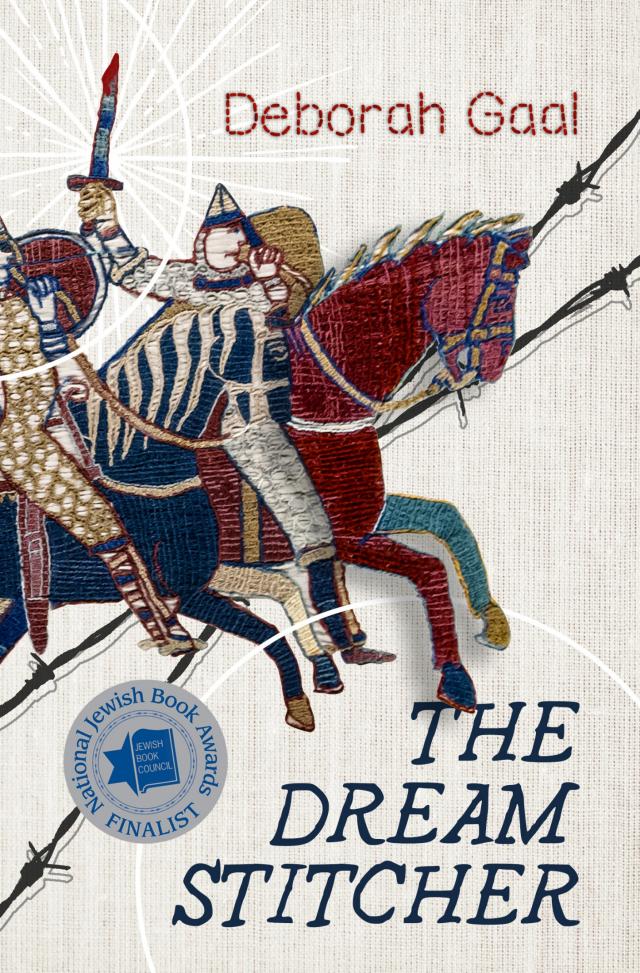


The
Dream
Stitcher
The
Dream
Stitcher
A Novel
by
Deborah Gaal
The Dream Stitcher
No part of this publication may be reproduced, distributed or transmitted in any form or by any means, including photocopying, recording, or other electronic or mechanical methods, without the prior written permission of the publisher, except in the case of brief quotations embodied in critical reviews and certain other noncommercial uses permitted by copyright law.
Anchor House Publishing
Publisher’s Note: This is a work of fiction. Names, characters, places, and incidents are a product of the author’s imagination. Locales and public names are sometimes used for atmospheric purposes. Any re- semblance to actual people, living or dead, or to businesses, companies, events, institutions, or locales is completely coincidental.
Copyright © 2018 Deborah Gaal
All rights reserved
ISBN: 978-1-7325896-0-5
Editorial and book production services by Flying Pig Media with Kerry Ellis.
Cover design by Kerry Ellis.
For Sara, Joe, Mary, and Lucas
To Chris, who knows how to
make dreams come true.
Contents
Prelude
Maude
Mrs. Wasserman
Goldye
Maude
Goldye
Maude
Goldye
Maude
Goldye
Maude
Goldye
Maude
The Dream Stitcher of Warszawa
Goldye
Maude
Goldye
Maude
Goldye
Maude
Mrs. Wasserman
Maude
Mrs. Wasserman
Maude
Katya
Maude
ACKNOWLEDGEMENTS
ABOUT THE AUTHOR
BIBLIOGRAPHY
“Great works of art are often the repository of dreams.”
A Needle in the Right Hand of God
By R. Howard Bloch
Prelude
Queen Mathilda
Maude le-Vieux, crowned Mathilda of Flanders, hadn’t walked the earth since the Norman invasion of England, her husband William-the-Bastard’s victorious albeit gory melee. She’d avoided the plagues, the Renaissance, the Industrial Revolution. The Great War. Now, in a blink, time on earth had marched forward to nineteen twenty-three, and she felt pressed to return.
She’d had nine hundred years to shed her identity, yet she couldn’t imagine a life other than one as queen. How she had loved to sit upon her throne, the weight of the heavy gold crown upon her head, the twist of pearls at her neck. How she had loved it when others dressed and undressed her and cooked her meals, giving her the freedom to sew and to direct others to fashion her creations in thread. “You. Stitch an emerald horse, stumbling, falling. Like this, see? And you. A crimson one, rearing. I will draw it for you.”
She feared the loss of these foregone memories and dismissed commitment to any other kind of life, despite her spirit guide’s agitation.
“The world has run out of queens. We’ve been patient. Choose or be assigned.”
Mathilda also bristled at the thought of leaving the garden paradise. She savored her ability to assume the form of a hummingbird, flitting back and forth from flower to flower, pollinating the beds of this resplendent kingdom. A violet ranunculus here. A crimson rose there. A mustard sunflower to add contrast. She simply thought of a hue, and it would appear. If she placed a flower in the wrong spot, she could pull it out as easily as ripping a stitch. Oh, if only she could stay.
“Our reckless indulgence has come to an end,” shrilled her guide. “Choose. Be certain. Once you choose, there is no going back. You must jump in.”
She took solace in the knowledge she’d procrastinated until a peaceful era. She’d experienced enough of battle and conflict to last for all eternity. No more! With the Great War behind them, what else could go wrong on earth?
Of all the potential choices, Mathilda felt certain Alenka’s baby should be the one. She’d studied the young Polish seamstress for months, as her belly grew round. Her physical form boded well for the baby: wheat-colored curls, cornflower eyes, and a straight nose.
The way Alenka sat in the wooden rocker while she stitched, spine erect, shoulders thrown back almost regally, solidified Mathilda’s decision. Alenka gripped her needle with purpose and at the correct angle, stabbing into the fabric and pulling out again in one bold movement. And her creations! Lace curtains with embroidered snowflakes in the most delicate blue rimming the edges; each snowflake a unique design. Magnifique! A baby blanket emblazoned with a golden swan sheltering her chicks. A quilt bursting over its flower borders of golds, greens, oranges, and purples.
If Alenka’s baby grew to be half as talented as her mother, this would be a body Mathilda could inhabit with joy. How content she’d be to work side by side as Alenka’s daughter throughout a long lifetime. The two of them would fabricate such wonders, the likes of which none had dared to stitch. She’d guide Alenka’s baby to stitch a queen’s memories into a tapestry that would cloak her castle walls.
Mathilda also studied Alenka’s relationship with her husband, Jan. They never shared a cross word and proved generous in their expressed affection, touching and cooing with the fervor of new lovers. They would treat their baby like a princess, and Mathilda would live a life of peace and stability. Indeed, Alenka and Jan met Mathilda’s key requirements: tranquility, wealth, respect.
It surprised Mathilda to feel a twinge of excitement as the inevitable day of her return to earth approached. Toujours maintenant!
“Go through the tunnel,” her guide had told her. “When the timing is right, you will feel it. Go to where the light dapples, then shadows, then darkens, and think about being one with the baby.”
Mathilda watched Alenka needlepoint an elk’s antlers. Three shades of nut-brown against a crème background. Suddenly, Alenka cried out, dropping the needle. The canvas pitched to the floor. Both hands flew to grip her stomach.
Jan guided her outside and up into the wagon, reined the horse, and the two journeyed down the cobblestoned streets of Warsaw. All the while, Alenka’s moans grew fiercer, more frequent.
Maintenant! Mathilda must make her way through the tunnel.
For one last moment, she tried to sear the memory of the garden into her psyche, praying she’d recall the brilliance of her flowers on a gray day.
She floated into the tunnel, reviewing her instructions. “If you go through the tunnel and you don’t jump in, you’ll remain on earth as a disembodied spirit, drifting with no purpose. Once you choose, you must jump.”
In the darkest part of the tunnel she saw a distant beam of light and aimed for it. Three other pulsating blue forms joined her, moving toward the same destination. She felt herself becoming denser, heavier than she’d felt in the garden.
Alenka’s moans reached a fevered pitch just as Mathilda and the other spirits arrived at a large windowed room where Alenka and four other women waged their birthing struggles.
Mathilda’s veil lifted. Images stood out clearly, the colors sharp. She perceived the sweat on Alenka’s furrowed brow, the grimace on her lips, the dampened hair clumped thick against her neck and shoulders.
This strain of human experience struck Mathilda with fear. She’d forgotten all about the perils of childbirth, although she herself had produced eleven children without much fuss. Surely, Alenka would be fine, too.
She hovered above the mother-to-be, pulsating, waiting to jump into the baby, careful not to bump Jan, or the two midwives who crowded around.
The other spirits took positions above their chosen mothers, save the one in the bed beside Alenka’s. No shimmering blue cloud suspended over a beak-nosed woman with black hair who lay awkward and grunting as her husband, a dark-bearded man of small stature gripped her hand.
Mathilda wondered why no spirit attended this couple’s baby. Could it have been delayed in the tunnel? Was it possible another presence resisted placement even more than Mathilda?
Alenka cried out. Her eyes widened in fright. Her fists clenched a white sheet, now darkening to the russet color of battlefields. The midwife pushed on Alenka’s belly, tugged between her legs, but the mother wouldn’t relinquish the baby.
Blood gushed forth, red soaking the sheets, the mattress, the floor.
Now, memories of other human frailties flooded Mathilda, frightening her anew of the painful world she was poised to reenter.
Alenka’s head fell slack. Her hands released her tethers. Her eyes glazed open. Jan crumpled to the ground, screaming. The midwife shook her head and cried.
A gray mist rose in tendrils from the top of Alenka’s head. The murky form spiraled upward, twisting, writhing, encapsulating Alenka’s pain. It moaned one deep, mournful sound, circling Alenka. Then, its color brightened to yellow as it drifted toward the tunnel.
Mathilda panicked. The baby’s body would remain locked inside Alenka’s in the grave. Mathilda would endure the torture of a disembodied spirit, doomed to roam the earth with no purpose. Barred from reentering the garden.
The beak-nosed woman pushed and grunted. “Aaaah! Get this damn thing out of me, already!”
“Now, now, sweetheart.”
“Shut up. I’d hit y ou if I could.”
“Almost there. One more push.” The midwife worked with ease.
A baby’s head crowned. Still, no spirit hovered above this coarse mother. Mathilda searched the room’s horizon, praying to discover a gap above another woman’s bed. But, no. She’d no time to despair. She must act. She jumped.
She felt a press on the sides of her head and her shoulders, like heavy stones. Then, the weight released, her eyes blinded by light. She gulped for air and screamed a high-pitched wail. Where was she? What fate had she chosen?
“Ruchel, such a beautiful little girl. Look how her legs kick. So strong.”
“She’ll be a fighter, this one.”
“Yes, like her mother.”
“What’re you talking? I don’t fight. We’ll call her Goldye.”
“But we agreed on Rebecca.”
“What? You want to argue with me? After I just pushed out a gem? I’ll give you such a clop on the head. Goldye. We’ll call her Goldye. We may not possess one zloty between us, but look how rich you have made us, my little hellion.”
Maude
Maude Fields sat in her kitchen with her daughter Rosie, dredging up the nerve to reveal how she’d fucked up and teetered on the brink of eviction. Her recipe for the perfect life had proven as false as a Newport Beach, California pre-fab set of double D’s.
Maude had believed if she worked hard and did all the right things she’d live a life filled with joy and prosperity. This allusive precept, a form of passive-aggressive rebellion aimed at her tragedy-obsessed mother Bea, had guided her actions as a dutiful daughter. It reinforced her evergreen responsibilities to her own daughter Rosie—an effortless, rewarding pleasure. It had required she be a devoted wife—which had been impossible with her philandering asshole ex. Oh, well. She’d redeemed herself with Will, hubby number two. Do-overs count, don’t they? They’d lived happily ever after until the death-do-us-part clause kicked-in.
Rosie rested her mug of tea atop her six-month-along basketball belly, her black curls bouncing with each nuanced head twitch. “Every second you delay this conversation another one of my brain cells goes straight to the baby,” Maude’s daughter said. “What’s up?”
Maude squeezed a tired wedge of lemon into a cup of lukewarm brew and stirred it with a limp tea bag. She stared at the expanse of her kitchen.
Sunshine streamed in through the windows, glinted off the iridescent chips in the granite counters, and threw tiny prisms against the ceiling. Will had insisted on buying the stone slab. He’d been right—about this and so many other things. Perhaps she’d relied on him a bit too much and forgotten how to think on her own.
Rosie’s curls poked up like question marks. She squinted across the table. “Well?”
The back of Maude’s neck and her forehead erupted with a fresh round of sweat. Her mouth dried up like a kale chip. She couldn’t organize words. She reached into her back pocket, pulled out the folded letterhead from Bank of America, and slid it across the polished wood.
“Read it,” Maude mumbled.
Rosie unfolded the Notice to Accelerate Foreclosure. “Dear Mrs. Fields, your mortgage payments are dangerously behind. If payment of $144,524.53 isn’t made within thirty days, we will take steps to foreclose on your home. We have tried repeatedly to reach you by phone. Please call us immediately and.....” Rosie raised her head, a look of shock and disillusionment etched on her face. “Jesus, Mom, what the hell? Why didn’t you tell me?”
Maude’s cheeks grew hot. “God, this is so embarrassing.”
“How long have you been dealing with this?”
She thought she could say anything to her daughter without suffering humiliation, but this was another inane belief now proving false. How many other demeaning lessons waited to hail down on her at the age of sixty-five? “A few months. I think. Kinda lost track.”
“How could you let this happen?” Relentless Rosie.
Maude couldn’t bear to revisit her combination of bad luck and stupid decisions. She rubbed at her temples, avoiding Rosie’s gaze.
It had started with Will’s cancer, which coincided with her mother’s mental decline: a two-for-one family disintegration special.
She’d used her savings on experimental cancer treatments for Will not covered by the insurance. She’d been forced to resign from her high-powered job to care for him until his death. Until their money couldn’t keep pace with Will’s unbridled cell growth. On top of that, she’d used cash she didn’t have to maintain Bea’s living expenses at a senior center in St. Louis, the Gatesworth, by borrowing an additional four hundred thou against the house. Long-term care insurance was a standard for Boomers, not Bea’s generation. And then, when Rosie needed in vitro fertilization treatments, Maude rallied to the cause by paying the seven grand a pop. Worth every penny, because fifty K later she’d conceived. You couldn’t put a price on a grandchild. Now, selling the house—even if she could—at a lower price than the mortgage wouldn’t satisfy the debt.
The thought of not experiencing her granddaughter romping through her lush flowerbeds, caking the granite counters with cookie dough, or marking up the plastered walls with tiny palm prints jabbed her heart.
Golden years, my ass. Here she was after decades of striving: a bag lady-in-waiting widow. Ah, well, don’t cry for me, Argentina. Just sum it up for your daughter. Simplify. “I borrowed against the house. Now it’s worth less than the mortgage, and I can’t afford the monthly payments.”
Rosie, her features inscrutable, gazed into the distance. She said at last, “I’m shocked.”
Maude’s embarrassment turned to anger. She stared at her daughter’s wide-eyed, naïve expression. The little shit. How wonderful to be young, before life’s had an opportunity to full out kick you in the ass. “What should I have done? Let Will die without exhausting all possibilities? Let your grandmother meander the streets? Not help you get pregnant?”
“I never would’ve accepted your help if I’d realized—”
“Stop it. That’s one decision I’m proud of.”
Rosie flushed. “Thanks, Mom. I probably wouldn’t have forged ahead without your support. I’m grateful.”
“I’m not the only one who didn’t foresee the real estate collapse, you know. Open the paper. There’s a long list—”
“I know, I know.” Rosie reached over the table and took Maude’s hand. “I just didn’t see this happening to you.”
Maude squeezed in return. Please, God, let Rosie be one of the lucky ones who never experiences life’s wrong turns.
Yeah, who was she kidding? Rosie had already dealt with her fair share of trials. It was no piece of cake being a single lesbian who made her sometime living as an artist. Rosie was entitled to her turn at happiness and Maude would do anything to help her get it.
At this point, Maude doubted anyone on the planet had impunity from hard times. She’d been raised to expect Fate’s cruel surprises, and now, maybe she at last understood Bea’s obsession in trying to anticipate them. A flash of memory hit her: At the age of eight she’d walked down the street with Bea. They stood on the curb at a crosswalk. “You can’t be too careful,” her mother had instructed. “Before crossing, remember. Look to your right. Look to your left. Look behind you.”
“Mommy, that’s silly. We’re on a sidewalk. There’re no cars behind me.”
Bea gripped her hand and gave it a jerk. “I’m not talking about cars!”
This is what Bea had meant. When you least expect it. Wham. From behind, you get knocked to the ground.
This mess was all Maude’s fault. She had no one else to blame. She’d looked to the right and the left, but she’d forgotten to look behind. Should have listened to you, Bea.
“So what’s the plan?” Rosie asked. “You’re not going to just roll over and die.”
“No, that doesn’t sound appealing.” Maude smiled, the first time all day. Her jaw ached. Christ, she must be grinding her teeth all night, wearing down her molars to the nub as her dream-state brain churned an endless loop of disaster scenarios.
Rosie stood, crossed the room and retrieved a legal pad and pens from the catchall drawer. She returned to the table, ripped off a few sheets of paper, and handed the tablet and a pen to Maude. “We’re two strong women. Let’s figure this out.” She sat and started scribbling.






