

Spymaster, p.1
Spymaster, page 1


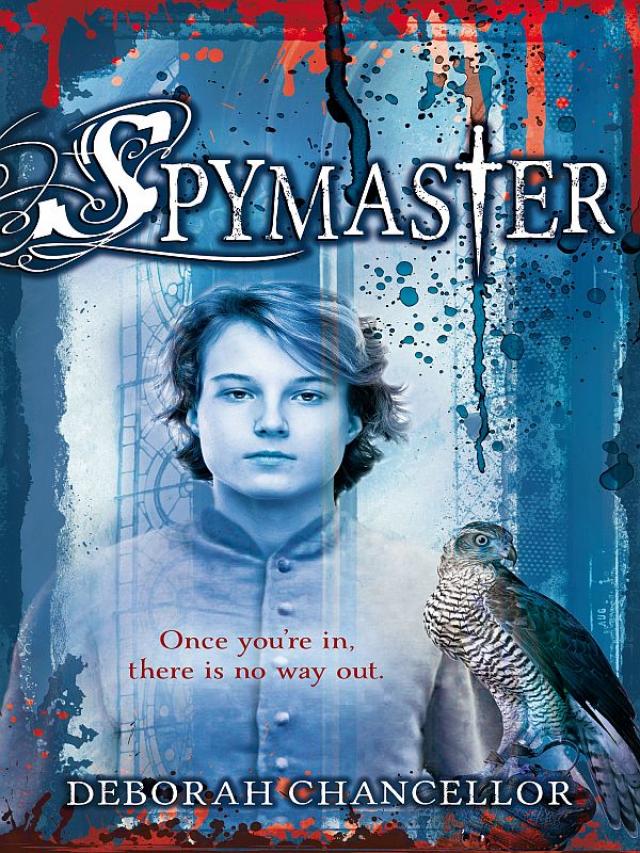
DEBORAH CHANCELLOR
CONTENTS
Chapter 1
Chapter 2
Chapter 3
Chapter 4
Chapter 5
Chapter 6
Chapter 7
Chapter 8
Chapter 9
Copyright
CHAPTER 1
Kit looked up, shielding his eyes from the bright winter sun. The bird was tiny now, just a small speck in the sky. It was soaring high above the timbered house and walled garden.
The boy felt numb. He had expected a rush of excitement, but instead he felt nothing. He pushed his unruly, dark hair out of his face and sighed. Who was he trying to get even with? You can’t take revenge on a simple case of misfortune.
As Kit watched his master’s hawk disappear from sight, the grim reality dawned on him. He had just made the biggest mistake of his life.
A cold wind picked up, and the gate of the hawk’s cage swung open. From beyond the grave, the words of Kit’s father echoed in his ears.
‘These hawks are like children to Sir Francis,’ he had said.
Kit’s father had been showing him how to bind the wing of a wounded falcon. It was a warm August evening, towards the end of their last summer together. He spoke slowly, frowning with concentration as he trimmed the damaged feathers with a sharp knife. The bird was struggling to break free of his firm grasp.
‘We must look after these birds well,’ he had continued. ‘If they ever come to any harm, we will pay for it dearly.’
Kit’s eyes welled up with tears at the memory of his father. They had always been close, since the death of his mother when he was just a small child. She had died giving birth to Kit’s little brother, John. Baby John had never thrived, and had been buried beside his mother a few months after his sad and bloody entry into the world.
Sir Francis had shown pity on his head falconer and taken Kit into his household, to be raised by a servant while his father continued working with the falcons. Kit had grown up knowing that he would take over from his father one day, and his apprenticeship had begun in earnest four years back, when he was ten years old.
Fortune had smiled on Kit and his father until a few weeks ago when an epidemic of sweating sickness hit the city of London. The fatal fever struck Kit’s father down without warning. One day, he was at the top of his profession, a successful falconer for the Queen’s Principal Secretary. The next day, he was dead.
Sir Francis sent a letter to Kit on the morning of his father’s funeral. He could not speak to Kit in person, as he was away on the Queen’s business. His brief message dealt a devastating blow. He had engaged the services of a new head falconer, who was due to take up his position at Walsingham’s house in Seething Lane that very day. Arriving before Kit’s father had even been laid to rest, this falconer was bringing his own apprentice to work with him.
Kit had lost everything in one fell swoop – his father, his family, his future. It soon became clear there was no place for Kit in Sir Francis Walsingham’s household any more.
The grieving boy watched with mounting resentment as the new man took over his father’s rooms in Walsingham’s town house. He had been obliged to bow to the falconer when they first met. But he knew that he could not work for this man, a constant reminder of his father, so cruelly snatched away from him. Kit would have to leave the house that he had always called his home.
Kit stood for a few minutes and stared at the cage door swinging in the wind. The red mist that had clouded his judgement began to lift. In a fit of anger he had set the master’s prize hawk free – he might as well have stolen it. The law was clear when it came to theft of any sort, let alone theft of such valuable property. If Kit was lucky, he would have his right hand cut off. But it was far more likely that he would be carted outside the city walls to Tyburn, to be hanged like a common criminal.
A common criminal. The thought struck home, like an arrow hitting its mark.
In God’s name, what have I done? Kit asked himself, in shock. He had always refused to go with friends to watch public executions; death frightened him and he felt it should be a private affair, not an entertainment for bloodthirsty crowds. Even in his worst nightmares, Kit had never dreamed that strangers would gather together to watch him step up to the gallows.
Kit’s thoughts turned to his father – what would he have to say about all this? Kit didn’t have to think too hard. His father would be turning in his freshly dug grave.
Kit’s act of defiance had been triggered by a hot-headed refusal to accept his bad luck. But now, above all he must stay calm and think carefully. He had to do something to reverse his fortunes and save himself from the hangman’s noose. Speed was of the essence. If he moved quickly he could gather a few belongings and leave the house before the falcon was missed and somebody raised the alarm.
Kit crept back down the gravel path, the small stones crunching noisily beneath his feet as he passed the empty flower beds. Sir Francis took pride in his tidy knot garden, and in summer these beds were vibrant with the brilliant yellow of sunflowers and marigolds. Now, in the middle of winter, the cold earth was devoid of colour.
Kit approached the house. With a stab of fear, he remembered that the smallest movement in the garden could be seen through the windows. He cursed the fashionable and expensive glass that showed off his master’s status at the court of Queen Elizabeth. The wooden shutters of a poorer house would have hidden his crime – but here in this wealthy household, he had acted in plain sight.
‘Wait there!’ A stern voice stopped Kit in his tracks. An upstairs window opened wide, flashing the sun’s brightness a hundred times over in the small, diamond-shaped panes of glass. Kit blinked, dazzled for a moment by the light. Sir Francis Walsingham, one of the most powerful men in the country, was standing at the window.
Was he working at his desk, or has he been watching me all along? Kit wondered, his heart pounding in his chest. Did he see what I have just done?
Walsingham looked down on Kit from his vantage point.
‘Come inside,’ he said. ‘I’ll be waiting for you in my study.’
Like a condemned man, Kit walked slowly up to the house, entering through the servants’ door and passing through the kitchen into the main hallway. He climbed the staircase, glancing up at the wooden linenfold panels that lined the walls from floor to ceiling. Sir Francis had the austere tastes of a Puritan, and his London town house had none of the ornate paintwork and gaudy tapestries that usually adorned the homes of the wealthy elite.
The master’s study was at the back of the house on the first floor, overlooking the garden. Kit had never been inside this room before – Sir Francis used it for official, not domestic business. Usually it was kept under lock and key. Kit did not have to knock on the door. It opened as he approached, as though Sir Francis could see straight through the heavy oak.
The office was dark and gloomy – Sir Francis had shut the windows and drawn a thick velvet blind to blot out the winter sunshine. A roaring fire was burning in the hearth, casting a flickering light over the room. There were letters and official documents everywhere, piled up in corners and on the tops of cabinets.
Walsingham was sitting behind a large desk. He looked at Kit, waiting for him to speak first. Kit was convinced his master had seen the hawk fly away, so there was no point in avoiding the subject of its disappearance.
‘It…it was an accident, Sir Francis!’ he stammered. Walsingham narrowed his eyes, dismissing the lie. Frown lines creased his forehead. He stroked his neat black beard, which was beginning to show a few streaks of silver.
‘We both know it was no such thing, Kit,’ he said quietly. ‘Fortunately, my hawk will return before the day is out, thanks to the fine training it received from your father.’
Walsingham’s voice was even, giving nothing away. Was he angry, or strangely indifferent? Kit’s fate hung in the balance, and the young apprentice was powerless to do anything about it.
‘You must learn to control your emotions,’ said Walsingham, standing up. He moved over to the fireplace to warm his hands. There was a chill in the air.
After a few moments’ silence, Walsingham spoke again.
‘Do you know what I do, Kit?’ he asked.
‘My father told me you are the Queen’s closest advisor,’ Kit replied. Walsingham looked closely at Kit, a trace of compassion softening his piercing blue eyes.
‘Your father was an excellent falconer and a very good man,’ he said. ‘He was proud of you.’
Kit nodded, biting his lip and blinking back the tears, which were coming again.
‘But your father did not know everything about me,’ Walsingham continued. ‘He did not know I am responsible for the Queen’s security. I run a Secret Service to keep Her Majesty safe.’
He spoke slowly, as though Kit were a small child who needed to know right from wrong.
‘England is crawling with Catholic traitors who want to kill our Queen, because she is a Protestant,’ Walsingham explained. ‘They want to place one of their own kind, a Catholic usurper, on the throne. I employ an army of secret agents to find out about these plots, so I can arrest the plotters.’ He smiled grimly. ‘Some call me the Queen’s Spymaster, and not without cause. I have spies everywhere – not just in England, but all over Europe.’
A log shifted in the iron grate in the hearth, sending sparks up the blackened chimney.
Why is he telling me all this? wondered Kit.
It was as though the spymaster could read his thoug hts.
‘I am always looking for new recruits,’ Walsingham said. ‘Protestants with no family ties…in fact, young men just like you, Kit. Now listen to me. I will forget the crime you committed this afternoon, and you will not be punished as you so richly deserve, but only on one condition. You must agree to work for me.’
Kit’s eyes widened with surprise. He was being asked to exchange his grim death sentence for a lifetime of service to the spymaster. Clearly, it was an offer he could not refuse. This cunning blackmail would guarantee Kit’s loyalty by saving his life. From this moment on, whatever Sir Francis asked of Kit, he would have no choice but to obey.
Walsingham did not even wait for Kit to reply.
‘You may stay in this house and tell people you are my falconer’s apprentice,’ he continued.‘ But your true occupation will remain a closelyguarded secret. You will swear your allegiance to the Crown and work for the Queen’s Service.’
The fear that had gripped Kit was swept away by a huge wave of relief.
I’m not going to die! he said to himself, unsure whether to laugh or cry. Never had his life felt more precious than at this moment. He knelt down before Walsingham, clutching at the gold rings on his fingers.
‘Thank you for sparing me, Sir Francis,’ he said. ‘I swear you will not regret your decision.’
Kit was surprised to find that he really meant these words; this was not a hollow promise, swiftly made and soon regretted. He vowed to himself that he would never let the spymaster down, whatever the cost.
CHAPTER 2
The sky turned blood red as the sun set on London. The December days were at their shortest, and although it was only four o’clock, darkness would soon fall over Walsingham’s house in the city. Servants were busy lighting candles and tending fires, and preparation for the evening meal was well underway. Somewhere in the distance church bells began to ring out, warning law-abiding citizens that the night curfew was back in force. It was time for people to go home, lock their doors, and stay out of trouble.
But not for Kit. He put on the black, fur-lined cloak that Sir Francis had just given him, checking once again for the letter hidden in the lining. In all his life he had never possessed such a fine garment, nor been entrusted with such an important task.
‘I want you to deliver this message for me,’ Walsingham had told him an hour earlier as they sat together in his study. He passed Kit a letter secured with a red wax seal. Then he smiled, a barely perceptible twist of his thin lips.
‘I am placing my trust in you, Kit,’ he said. ‘Prove yourself worthy of that honour.’
Walsingham reached for a cloak that was hanging over the edge of a chair.
‘You will need this to keep warm,’ he said, handing it to Kit. He showed him a pocket concealed in the hem.
‘Hide the letter in here,’ he said. ‘And give it to my man tonight. He is expecting you.’
Kit knew better than to ask about the contents of the letter, or for the identity of its recipient. He stowed the letter away carefully.
‘Where am I to find him?’ he asked. Walsingham nodded approvingly, noticing Kit’s discretion.
‘He lives in the tall white house beside St Margaret’s Church in Westminster,’ he replied. ‘Do you know where that is?’
Kit had lived in London all his life and knew every overcrowded street and stinking alley. This house in Westminster was a long walk away, and the journey there would take him right across the city. But he knew he would find it easily.
‘Yes, Sir Francis,’ he replied confidently. ‘You can rely on me.’
Walsingham looked thoughtful.
‘I have been watching you over the years, Kit,’ he said. ‘You are loyal, just like your father was. Persistent and determined too. You need all these qualities to work for me. But you will also have to grow eyes in the back of your head. Take my advice, young man. If you are followed tonight, don’t look over your shoulder and don’t try to run. Find a crowded place to hide.’
He patted Kit’s shoulder as he got up from his chair.
‘God be with you,’ he murmured. He went over to his desk and picked up a document from the top of a pile. He scowled as he scanned its contents.
‘I have an urgent matter to attend to now,’ he said, turning away from Kit and dismissing him with a flick of his hand. Kit took the cloak and slipped out of the room.
Kit left through the servants’ door at the back of the house, as the sun sank below the rooftops. A narrow path took him behind the garden to the south end of Seething Lane. The temperature had dropped, and frost was already forming on the ground beneath his feet. It was going to be a bitterly cold night. Kit’s teeth were chattering; he couldn’t tell if he was shivering from cold or fear. He felt his father’s dagger pressing at his hip under his warm, black cloak. Never had he felt more need of a weapon than tonight.
A few streets to the east, the tall turrets of the Tower of London rose above the city. Even as night fell Kit was aware of the Tower’s imposing presence. As he set off on his way, he looked back towards the Tower – the final destination for many a traitor. Kit shuddered. He wondered whether the letter he was carrying would send some poor soul to that place, but he pushed the thought from his mind.
The streets around Seething Lane were quiet, and Kit only encountered a few men returning from an afternoon spent south of the river. From their high spirits, it looked like they had won some money at the bear baiting in Southwark. Kit kept out of their way, trying to remain invisible as he walked in the dark shadows cast by the overhanging houses.
As Kit approached the river, the city seemed to spring to life. The late arrival of a trading ship at Three Cranes Wharf had kept sailors and dockhands working beyond the curfew, and crates of spices were being winched by torchlight from the deck of the boat. Kit walked a short way along the busy dock then stopped to watch the activity for a few moments. Some footsteps behind him also came to a halt.
Kit quickened his pace as he continued along the riverbank. Behind him, the footsteps echoed again on the uneven paving. Kit knew something was wrong. Trying not to look back over his shoulder, he took a sharp turn away from the river and walked up into a side street, where he knew there was a tavern.
Find a crowded place to hide. Sir Francis’ advice was still fresh in his mind.
As luck would have it, a noisy crowd had gathered outside the tavern. Kit elbowed his way to the front of the group to see what the excitement was about. Two sailors had begun a fight over a barmaid, and punches were now being thrown. The onlookers were picking sides and cheering on their favourite.
Kit watched the fight for a while, mingling with the crowd. Slowly, he edged towards the tavern and moved inside. The mood in here was calmer, but wasn’t much quieter. Beer was flowing freely, double beer, which was twice as strong as anything Kit was used to. He paid a penny for a quart, and sat down with a group of men who were playing cards. They were too drunk to notice Kit’s arrival, and they let him take a hand in the next round. Kit played well, but in his sober state he was careful not to cause offence by winning. He was also careful not to touch his beer.
I need a clear head, he thought, knocking his pewter tankard to the ground with a deliberately clumsy sweep of his hand. Its murky contents spilled over the filthy sawdust. Two long hours and many card games later, Kit’s companions staggered up to leave. Kit followed them out of the tavern, past the scene of the brawl. The crowd had long since dispersed, and the street was quiet. Kit bid the men farewell and set off again. With huge relief, he realised that he had given his pursuer the slip.
I can do this, he thought. I just need to believe in myself.
Kit made his way along Thames Street towards Blackfriars, then headed north for St Paul’s, the great church with a tall spire at the heart of the city. The temperature had dropped to well below freezing, and ice was forming in the muddy ruts left by the wheels of carts and carriages. Turning west again, Kit left the city through the old stone archway at Ludgate. He continued his westward journey along Fleet Street, then along the Strand, a broad, well-kept street with huge mansions that faced the river. When he walked past Queen Eleanor’s Cross at Charing Cross, he knew he had almost reached his destination. He slipped through the gatehouse to enter the village of Westminster.






